Winter in South Central Utah has a way of testing commercial buildings quietly. One storm turns into another, temperatures swing up and down, and before long, business owners start noticing slow drains, small ceiling stains, or ice building where it shouldn’t. These are often early signs of commercial roof winter damage, and they tend to show up long after the weather that caused them.
Ice buildup, heavy snow, and repeated freeze–thaw cycles place steady pressure on commercial roofing systems, especially flat and low-slope roofs, where flat roof snow risks are higher. At Clean Cut Roofing & Siding, we help business owners understand what’s happening on their roof and how to stay ahead of winter problems before they interrupt operations.
Key Takeaways
- Commercial roof winter damage develops over time, not just during a single storm.
- Ice damage roofing issues often begin at drains, seams, and roof edges.
- Flat roof snow risks can be managed with estimates, maintenance, and a winter plan.
If you want a clear picture of how your roof is handling winter conditions, Clean Cut Roofing & Siding is here to help.
How Commercial Roof Winter Damage Develops in South Central Utah
Commercial roof winter damage refers to the structural, waterproofing, and drainage issues caused by snow, ice, wind, and temperature swings. In South Central Utah, these risks are amplified by daytime melting and nighttime freezing, conditions that stress commercial roofs repeatedly throughout the season.
Snow alone is not always the problem. Wet snow and ice are much heavier than they appear, and when they sit on a roof for extended periods, they increase the load and strain. Flat and low-slope roofs are particularly vulnerable because snow does not shed naturally, increasing flat roof snow risks around drains, seams, and penetrations.
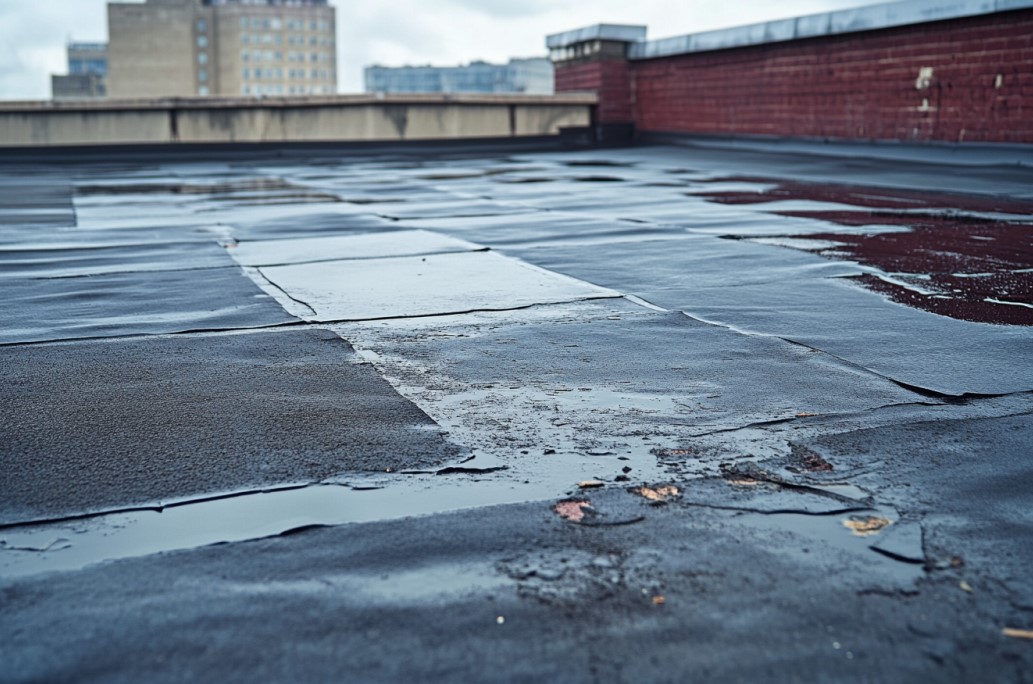
Ice damage roofing issues usually start when meltwater cannot drain properly. Frozen drains, scuppers, or gutters trap water on the roof surface. That water refreezes, expands, and works its way into seams, flashing, and membrane laps. Over time, this compromises waterproofing and accelerates wear.
Most commercial roofs are designed to handle winter conditions, but age, drainage design, and maintenance history determine how well they perform. Commercial winter damage to your roof is rarely caused by one event; it builds gradually across the season.
Important Factors to Consider Before Winter Stress Impacts Your Roof
Before winter fully sets in, business owners should take a close look at a few key factors that influence commercial roof winter damage.
Roof Type and Slope
Flat and low-slope roofs face higher flat roof snow risks because snow and ice rely entirely on drainage systems to leave the roof.
Drainage Condition
Drains, scuppers, and downspouts must remain open. Even minor blockages can quickly lead to ice damage and roofing problems.
Roof Age and Materials
Older membranes, seams, and fasteners are less tolerant of repeated freeze–thaw cycles and movement.
Building Use
Leaks over offices, retail spaces, medical facilities, or storage areas create safety and operational concerns beyond the roof itself.
Estimate and Maintenance History
Roofs with routine estimates and maintenance experience fewer surprises and less severe winter damage.
Understanding these factors helps business owners plan proactively instead of reacting mid-winter.
How Ice and Snow Create Damage on Commercial Roof Systems
Snow Accumulation Adds Structural Stress
Each storm adds weight. Compacted snow and ice increase load on decking, joists, and support systems.
Ice Damage Roofing Begins at Drainage Points
Frozen drains trap water, which refreezes and spreads damage outward across the roof surface.
Freeze–Thaw Cycles Weaken Materials
Roofing membranes expand and contract repeatedly, stressing seams, flashings, and fasteners.
Wind Accelerates Winter Damage
Strong winter winds lift membrane edges and drive snow and moisture into vulnerable areas.
Commercial roof winter damage typically builds quietly, which is why monitoring and estimates matter.
What Makes a Commercial Roof More Resilient in Winter
Consistent Water Movement
Roofs designed to move water efficiently reduce ice buildup and ice damage roofing risks.
Reinforced Seams and Flashings
Strong detailing prevents small issues from spreading across the roof system.
Balanced Insulation and Ventilation
Even roof temperatures help reduce freeze–thaw stress and ice formation.
Commercial-Grade Materials
Weather-tested membranes and fasteners improve long-term performance against flat roof snow risks.
As mentioned earlier, winter performance depends on systems working together, not just surface materials.
Early Warning Signs of Commercial Roof Winter Damage
Business owners should watch for:
- Standing water or ice that does not drain
- Ceiling stains or interior leaks
- Sagging roof areas
- Unusual noises during temperature swings
- Icicles are forming away from the roof edges
These signs indicate it’s time for a professional evaluation.
Practical Winter Strategies That Reduce Risk
- Schedule pre-winter roof estimates
- Keep drains and gutters clear
- Establish a professional snow-removal plan
- Avoid DIY roof access in icy conditions
- Document estimates for insurance purposes
These steps significantly reduce the likelihood of major commercial roof winter damage.
Commercial Roof Winter Damage, Explained Simply
Winter damage doesn’t mean your roof is failing; it means it’s under stress. In South Central Utah, preparation is what keeps that stress manageable instead of costly.
Flat roofs require extra attention because flat roof snow risks build faster and often reveal problems later. With the right plan, most ice damage roofing issues are preventable.
Clean Cut Roofing & Siding helps business owners stay ahead of winter instead of reacting to it.